Manx Births, Deaths & Marriages (BMD)
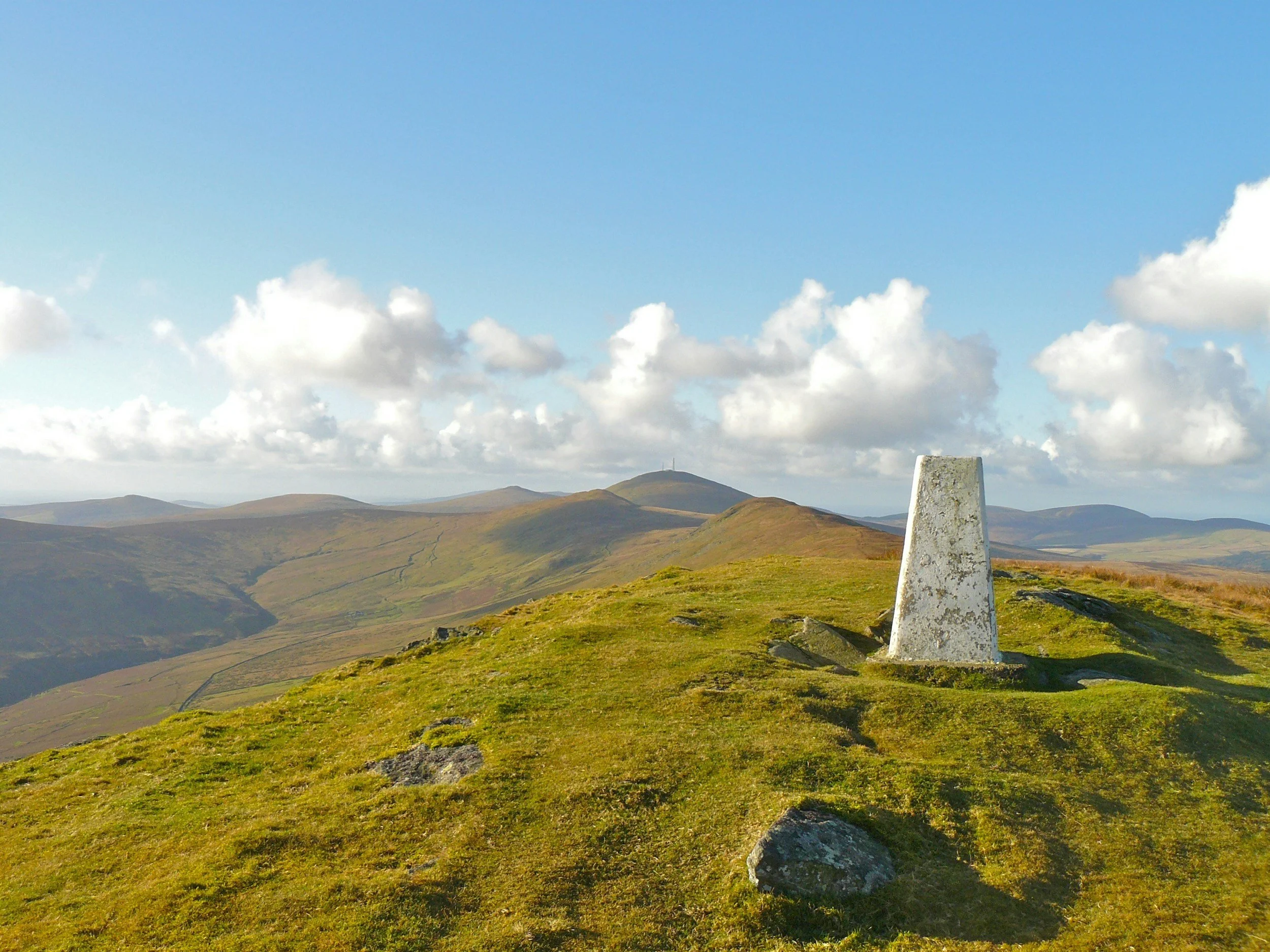
This is an interview with Denise who runs ManxBMD:
Can you tell us a little about yourself and your connection to the Isle of Man?
I’m half Manx. My mother was Manx and family are still on the Island, although sadly many have since passed. I moved to the Island in the 80s. It was the best place to move to when I moved from my parents house as I already had friends and family there and I knew the island very well – a home-from-home. I moved off-island in the 90s and I now live in Scotland.
What first sparked your interest in Manx family history and records?
I didn’t start looking my Manx side of the family until I had got as far as I could with my English ancestors, which wasn’t very far! The reason was because at that time there was no online access to the records. A visit to the Island was need to do anything.
My interest in my family tree began after a visit to Highgate Cemetery in London. We were on a trip and my husband wanted to see the tomb of Karl Marx. There are two parts to the Cemetery, and you can pay to walk round the closed section, and it is a very interesting place. From the Victorian attitudes to death and remembrance, as well as the numbers of famous people buried there, and recognising scenes from old Hammer Horror movies. There was a tomb in the Egyptian Avenue to someone called Alfred Scammell. My husband said is this a relative? I didn’t know, but the idea of being buried in Highgate cemetery really appealed. But to be buried in those tombs you must prove a familial link. And that is literally how I started to research my family tree.
As time goes on you begin to realise that it’s not just births, marriages and deaths or the census that can tell you about your family. There is so much information in records offices, in museums, old newspapers etc that can give an idea of what it was like for your family at a specific period of time and if you’re lucky, or unlucky(!), you might find your relative mentioned in a newspaper article. I admit, I found quite a few of my ancestors when looking at the old Manx newspapers in the museum.
It is with our grandparents that we have our first link to the past. Just by talking to them and asking them about what it was like for them when they were growing up, going to school, going to work – everything that we do – we can find out so much. It is now very popular to record oral histories which is a great start.
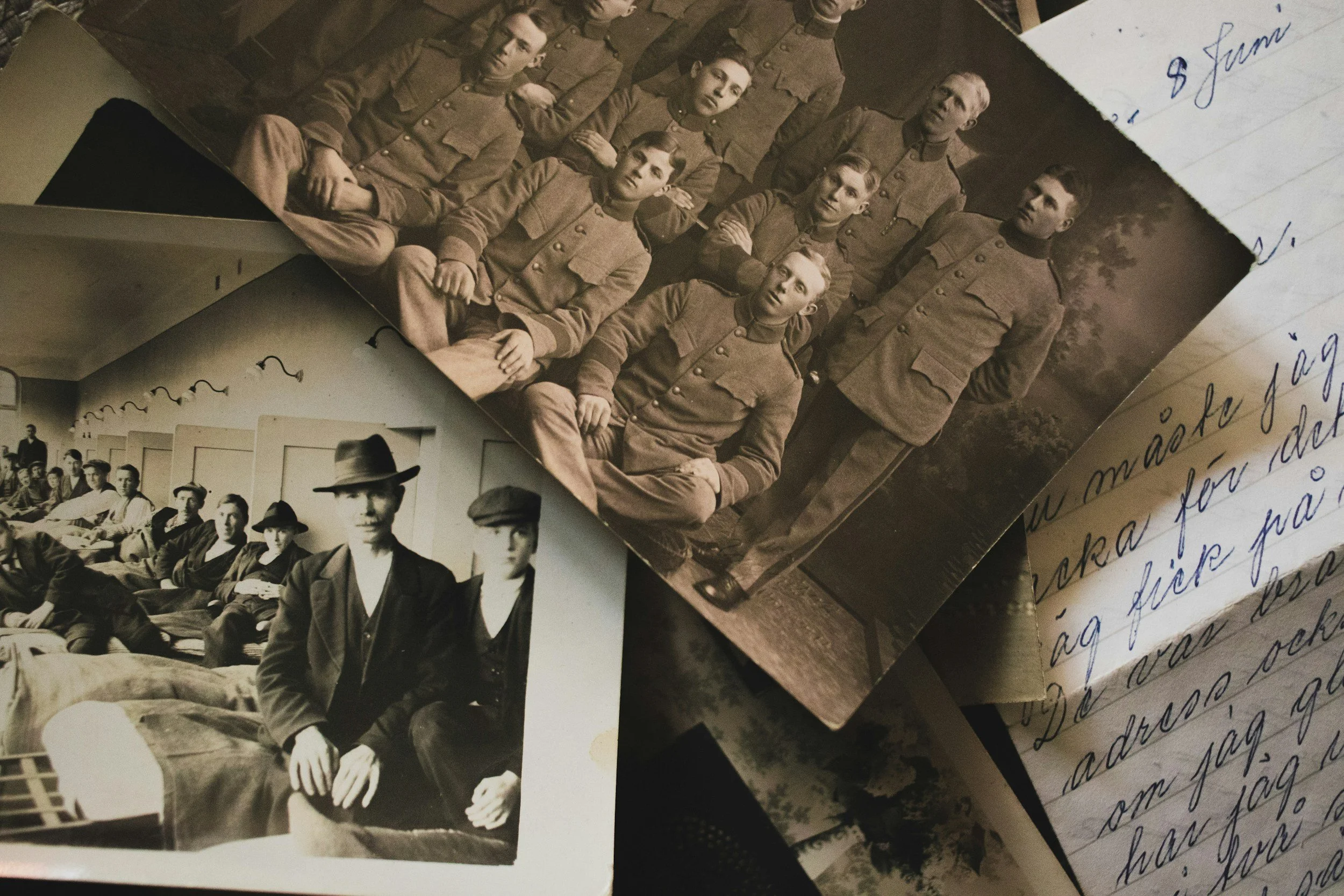
Old records
The earliest record I have is a marriage - from 1846, Elizabeth Lord married John Watterson, the latest is in 2015.
What is ManxBMD, in your own words, and what originally motivated you to create it?
ManxBMD is an online index of births, marriages and deaths since the start of civil registration. The original indexes were all handwritten, and these have been transcribed and added to a database for easy searching. In England and Wales, civil registration of births, marriages and deaths started in July 1837. On the Isle of Man the responsibility for the registration of marriages transferred from the church to the Civil Registry in 1884, but compulsory registration of births and deaths started earlier in 1878. Although there are parish registers prior to these dates, I had to have a cut-off point and so ManxBMD covers civil registration only. There are entries that are earlier because it was possible to re-register the event and so it was added to the index.
I was very lucky that I didn’t have far to travel to the Isle of Man and a (now ex-)husband who was happy to subsidise my habit! I could visit my family and research my family tree. I was also very lucky that there weren’t many instances of the surnames I was looking at. But once I got back to the mainland, I was stuck. In the 1960s the church of Jesus Christ and Latter Day Saints made microfiche copies of the indexes for the Isle of Man (and worldwide). These were available to view at their various family history centres all over the world. The biggest in the UK is in London, but again, for many it is a long journey (although if anyone needs to, they can order a fiche to view at their local centre) So I came up with the idea of putting them online. I spoke with Sue Cain, at the Civil Registry, and she liked the idea and was happy for me to transcribe the indexes and put them online. And that’s where it started and continues to this day.
Did you expect ManxBMD to grow into what it is today when you first started?
Oh good lord no, I didn’t! I must admit I totally underestimated the number of entries that were in the indexes. But once I had started, I didn’t want to leave it. I felt that it could be so useful. I had a lot of help putting my tree together, and I wanted to give something back.
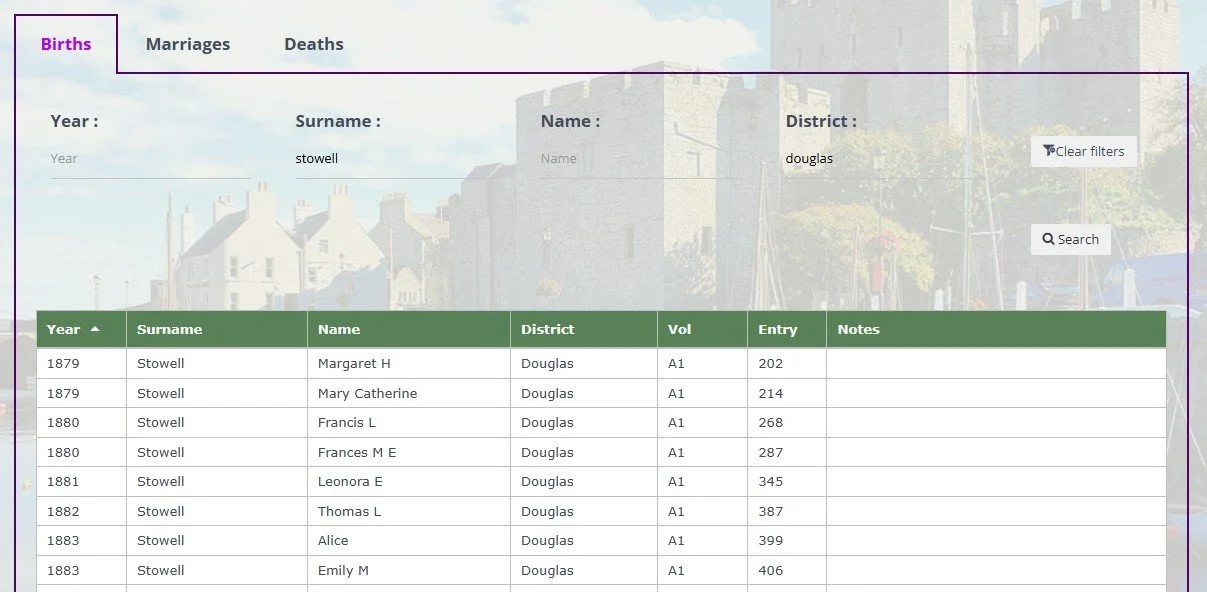
A lot of records!
There are 125,667 in births, 124,757 in deaths and 128,506 in marriages
What’s involved behind the scenes in keeping ManxBMD running and up to date?
There is a lot more than most people realise. When I first started to transcribe, I had help from some others that will transcribe the same index page. This double keying meant that if there was an error when the comparison between the two transcripts was done, it would be picked up and could be checked, it was a way of ensuring accuracy. But this does mean everything takes twice as long. I also get messages from people who will let me know has been an error. This might not be my error during transcription, but an error made by the clerk who put the index together. You have to remember that in the late 1880s the index was put together because there needed to be an index nobody thought about family history at that time. Many of the errors are just down to mistakes by a human. So as time goes on people will let me know about spelling errors and I will correct these by making a note against the original entry and adding a new entry with the correct details. This means my database retains its integrity of being a copy of the original index mistakes and all as well as an accurate index.
A side project over the last few years has been to make some sense of the marriage entries. For whatever reason, during several periods the clerk added only the male names to the index, the females were missed off. This means that if you are looking for a marriage of a female relative and you’re not sure who she married, there is a possibility you won’t find it. So I am now spending time finding the missing brides. What I have also been doing is matching up brides and grooms and making a note of the spouse name, or possible spouse names as an addition to the database entry. This has been a very long project and is still not complete. ManxBMD is a project, it’s not a full time job (even if it does feel like it), I do have other commitments.
As well as working with the actual data, there is also the technical side. The website itself is very basic, but it’s the database that is complex. The cost of domains, hosting, licensing all needs paying each year. Technical support is very expensive as major changes are time consuming. And just like our computers, there are regular updates which need putting in place.
Have you had any messages or stories from users that really stuck with you?
This is my favourite - not long after the website had begun, I had a message from a lady who was looking for details of her mother’s birth so that she could find the parents and so on. She gave the details of who she was looking for and asked for some help. Normally my response would have been to check the records in all the districts a couple of years before and after the birth and then check with the civil registry to see which one has the right parents. I can’t do people’s research for them but in this case I could because the person the lady was looking for was the brother of my grandfather! We’re still in touch today.
At the beginning I would get queries from people who were unable to find a specific entry. This would have been because transcribing was not complete and I would be happy to do a look up for them from the photographs I had the index pages. Sometimes I might use FindMyPast for further information. Everyone was always very grateful for the details I provided, and several lost relatives were found. That does make me happy, that because of my work, someone has been able to make connection with their families.
But there are always those who are not happy. For all the nice messages I’ve had, I’ve had equal number complaining or just being plain rude about what was available. ManxBMD is just civil registration: no, you’ll not find an event in 1700; no, you cannot order a certificate from me; no I can’t tell you what time you were born; and I can’t help with a custody query! I know from experience that it is very frustrating following a lead and not being able to get any further. I have had people writing giving me lots of information and telling me where they are stuck and if I could I was happy to help especially as my database was not then complete. And it was lovely to receive a response thanking me for my efforts and telling me how much ManxBMD has helped them.

What about divorces?
Not on ManxBMD. It's not part of the standard civil registration process. These will most likely be held at the Deeds Registry in Douglas.
Why do you think preserving Manx records and family history is so important, especially for people no longer living on the island?
When services like Ancestry and FindMyPast first started there also sprung the term “internet genealogy”. It was as though internet genealogy and genealogy were two separate things. Of course they are not it’s just that museums and archives now realise that by digitising their holdings they not only preserve but also offer their services to a wider audience. Just because the Isle of Man is small in size and population, doesn’t make it insignificant and there are many people realising the have a connection to the Island and wanting to find out more.
The Isle of Man Family History Society has a large collection of material that could well have been lost in an archive – school registers, directories, Wills. Enthusiastic volunteers transcribe the information, but nothing beats seeing the real thing, even if it is on screen. As they say, one mans rubbish is another mans treasure.
I left the island in the mid-1990s. Like many at that time, I moved for better opportunities. But I think as you get older you start to think more about where you came from. I live in Scotland but I don’t have a Scottish accent, so when I meet someone new they often ask where I’m from. Where am I from?
Do you think interest in Manx genealogy is growing, and if so, why now?
The increasing amount of information available online does make genealogy a little easier. Programs such as Who Do You Think You Are? also have played a big part in staring up interest in genealogy I haven’t watched the series for a long time but I know when one is on because the visits to my site increase! Although they are tracing a celebrity family tree, that doesn’t mean that your own family isn’t as interesting.
Services such as iMuseum and the Isle of Man Family History Society with their online records mean that for those off island they can continue to research their roots from the comfort of their home. Social media such as Facebook means that people from all over the world can talk to each other which is something that could not have been done before the internet.
If someone is just starting to research their Manx family history, what advice would you give them
For family history generally do be prepared to discover some skeletons in the cupboard. If something inappropriate occurred within the family – from crime to unwed mothers – it was common for families to try and suppress that information. In my own family tree I was having trouble fitting a lady and her child to the right branch. After discussing it with an elderly cousin I discovered that another family member had constructed a family tree for another on the instruction that no scandal was to be found. This lady and her son had been “lifted and shifted” to another branch and then published as fact. And yes, I’ve a cupboard overflowing with skeletons!
For Manx history I strongly recommend joining the Isle of Man Family History Society. They have a website and there is a members section with loads of information which has been transcribed from fishermen to school records to Memorial inscriptions and thousands and thousands of Wills. I don’t know why, but the Manx were very keen on writing a Will – although how the deceased expected people to share a quarter of a cow each I’ve no idea!